

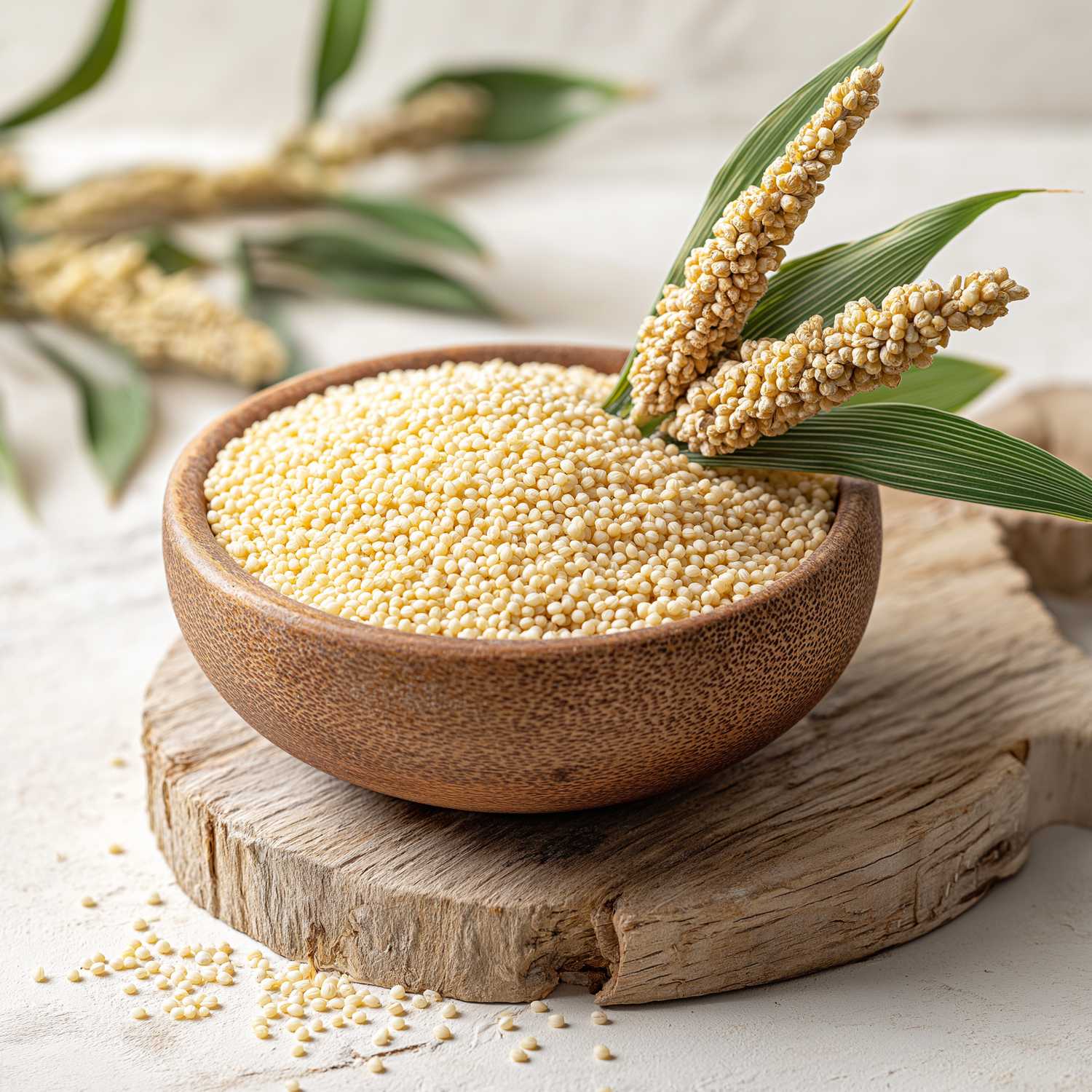
Pearl millet (Pennisetum glaucum)
Pearl millet (Pennisetum glaucum), also known as paneer millet or bajra, is one of the oldest cultivated grains in the world. It belongs to the grass family (Poaceae) and is traditionally cultivated in Africa, India, and parts of Asia. It is increasingly valued in modern diets as a plant-based source of minerals and silicon.
Botanical characteristics
Pearl millet is a robust, annual cereal plant with a strong stalk and characteristic, panicle-like ears. It thrives even in dry, nutrient-poor soils and is particularly adaptable. The grains are round and pearl-shaped; their color ranges from white to gray to yellowish.
Ingredients
Pearl millet contains a variety of nutrients and plant substances, including:
- Minerals: magnesium, iron, zinc, copper and silicon
- B vitamins: including niacin, vitamin B₆ and folic acid
- Silicon (silica)
- Essential amino acids such as methionine and leucine
Traditional use
Pearl millet has been a staple food in many cultures for centuries. In traditional botanical science, its plant silicon content is associated with connective tissue, skin, hair, and nails.
Note: This information is based on traditional use and does not constitute approved health claims.
Modern use (advertising)
Pearl millet extract is often used in dietary supplements as a plant-based source of minerals and trace elements – often in combination with other silicon sources such as bamboo or certain mushroom extracts.
Our product Skin Hair Nails contains per daily dose (2 capsules):
- 200 mg pearl millet seed extract
- 720 mg bamboo shoot extract (of which 540 mg silicon dioxide)
- 100 mg squirrel extract (of which 30 mg polysaccharides)
Scientific studies (no health claim)
These studies are for general information purposes only:
- Nutritional and health benefits of pearl millet, Frontiers in Nutrition (2021)
- Silicon and its potential role in human nutrition, Journal of Trace Elements in Medicine and Biology (2018)
Instructions for use
- Food supplements are not a substitute for a balanced diet
- Do not exceed the recommended daily dose
- If you have any existing illnesses or allergies, seek medical advice
- Traditional indications of use are not promises of healing
Frequently Asked Questions (FAQ)
1. Is pearl millet gluten-free?
Yes, pearl millet is naturally gluten-free and can be part of a gluten-free diet.
2. Are there any approved health claims for pearl millet or silicon?
No, there are currently no approved health claims for pearl millet and silicon under EU regulations.
3. Why is pearl millet often combined with bamboo?
Both are considered plant-based sources of silicon and complement each other in their nutrient profile.
Legal notice
This article provides general information about pearl millet (Pennisetum glaucum). It does not replace medical advice. There are currently no approved health claims for pearl millet and its ingredients under EU Regulation (EC) No. 1924/2006.
Transparency notice
The products mentioned in this article refer to products from our own range. We generate revenue from the sale of these products. Disclosures are in accordance with Section 5a of the German Unfair Competition Act (UWG) and Section 3 of the German Commercial Code (HWG).
