

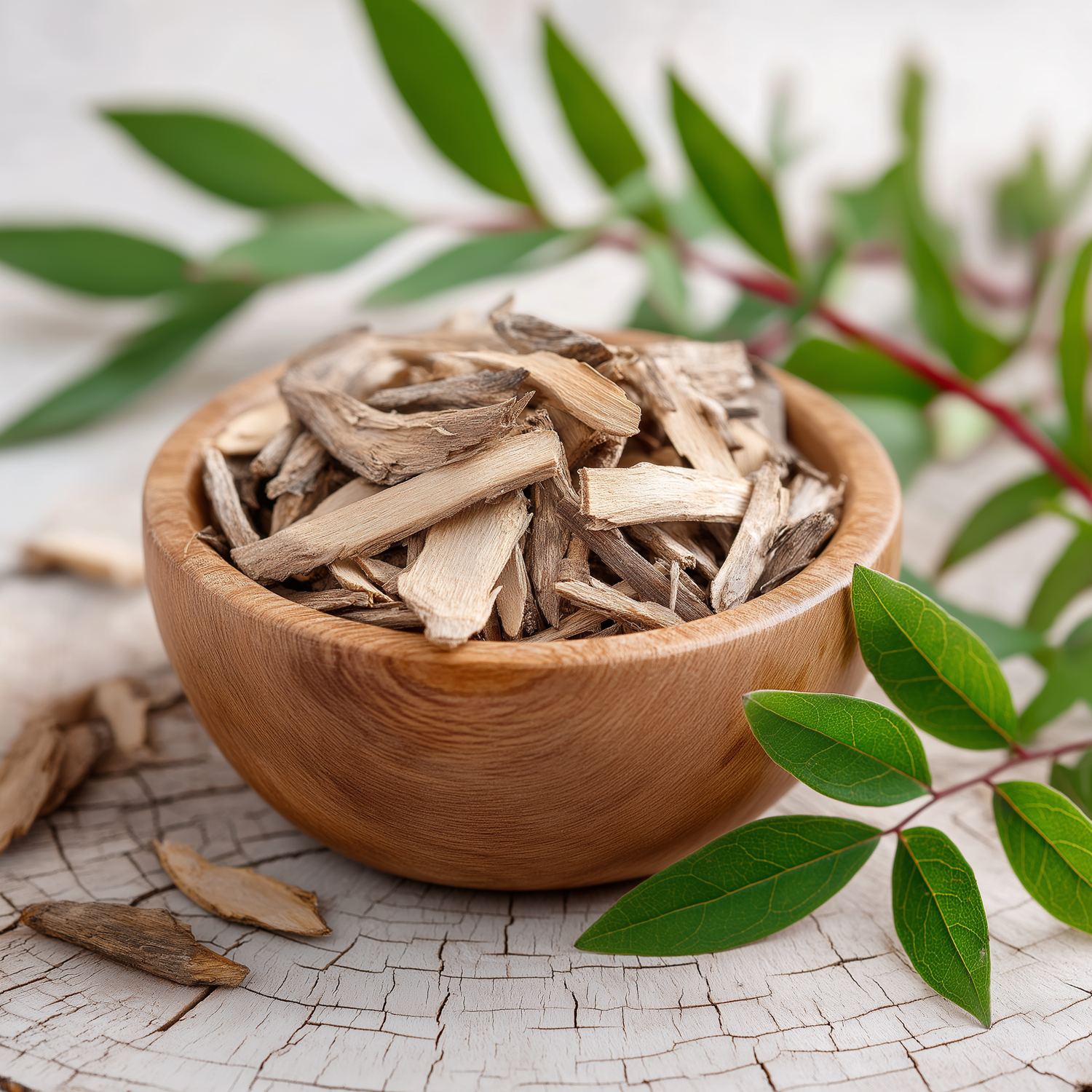
Trans-Resveratrol (Polygonum cuspidatum)
Trans-resveratrol is a secondary plant substance from the group of polyphenols. It is particularly abundant in the root of Japanese knotweed (Polygonum cuspidatum), a herbaceous plant in the knotweed family. The trans form is considered to be more bioactive and stable than the cis form.
Resveratrol has been scientifically studied for years, particularly with regard to its role as a polyphenol with antioxidant properties.
Botanical characteristics
- Perennial herbaceous plant, up to 3 m tall
- Hollow, bamboo-like stems
- Broad-lanceolate leaves
- Originally from East Asia, now also widespread in Europe (partly invasive)
- The root (radix) is used primarily for medicinal purposes
Ingredients
Important ingredients of the root:
- Trans-resveratrol (stilbene compound)
- Piceid (glucoside of resveratrol)
- Emodin (anthraquinone)
- Other polyphenols and stilbenes
Although resveratrol is being intensively studied in research, there are currently no approved health claims under EU Regulation (EC) No. 1924/2006.
Traditional use
In East Asian medicine, the root is traditionally used for digestive complaints, circulatory problems and for general strengthening.
This information is based on traditional tradition and is not to be equated with scientifically proven statements within the meaning of the EU Health Claims Regulation.
Modern use (advertising)
Today, trans-resveratrol is mostly extracted from Polygonum cuspidatum and used in dietary supplements – often in combination with other polyphenols.
Our product KoloBios contains per daily dose (13.3 g):
- 30 mg trans-resveratrol
- supplemented with acacia fiber, psyllium husks, grape seed extract and OPC
The properties mentioned are based on traditional use and scientific literature. They do not constitute approved health claims .
Scientific studies (general information)
These studies are for general information purposes only:
- Resveratrol and Gut Microbiota Modulation, International Journal of Molecular Sciences (2022)
- Biological activities of resveratrol, Nutrition Reviews (2011)
Instructions for use
- Food supplements are not a substitute for a balanced diet
- Take according to the manufacturer's recommendation
- Consult a doctor if you have chronic illnesses or are taking medication (e.g. anticoagulants)
- Not recommended during pregnancy and breastfeeding without medical advice
Frequently Asked Questions (FAQ)
What is the difference between resveratrol and trans-resveratrol?
The trans form is considered to be more bioactive and stable and is therefore preferred in dietary supplements.
In which foods does resveratrol occur?
It is found in red wine, red grapes, peanuts and berries – but usually in small amounts.
When should you take resveratrol?
Best taken with a meal that contains some fat, as resveratrol is fat-soluble.
Are there any interactions with medications?
High doses can theoretically affect the effectiveness of anticoagulant medications – if in doubt, seek medical advice.
Is resveratrol vegan?
Yes, provided the capsule material does not contain any animal ingredients.
Legal notice
This article is for general information purposes only. It does not replace medical advice. There are currently no approved health claims for trans-resveratrol under EU Regulation (EC) No. 1924/2006.
Transparency notice
The products mentioned in this article refer to products from our own range. We generate revenue from the sale of these products. Disclosures are in accordance with Section 5a of the German Unfair Competition Act (UWG) and Section 3 of the German Commercial Code (HWG).
