

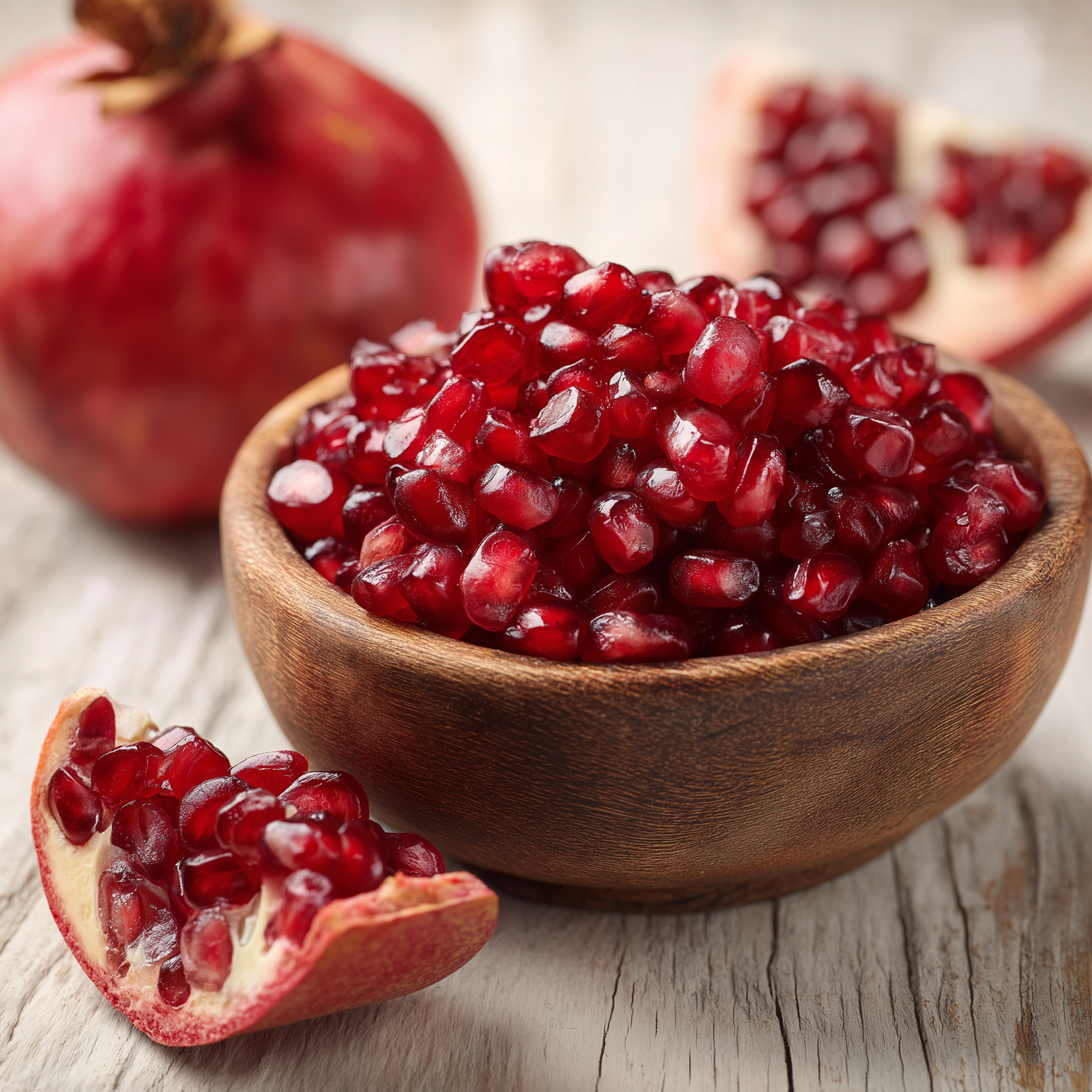
Pomegranate seed powder (Punica granatum)
The pomegranate (Punica granatum) is one of humanity's oldest cultivated plants. Originally native to the Mediterranean and Western Asia, the fruit has been valued for thousands of years both as a food and in traditional herbal medicine.
Botanical characteristics
- Family: Pomegranate family (Lythraceae)
- Growth form: Small tree or shrub
- Fruits: Red, spherical fruits with numerous seeds surrounded by juicy pulp
Ingredients
Pomegranate seeds and pomegranate seed powder contain, among other things:
- Polyphenols (e.g. ellagic acid, punicalagins)
- Flavonoids
- Vitamins (e.g. vitamin C)
- Minerals
The antioxidant effect of polyphenols is being intensively researched in science.
However, there are no approved health claims in the EU for food supplements containing pomegranate seed powder.
Traditional use
The pomegranate is traditionally used in various cultures:
- to support general well-being
- to promote digestion
This information is based on traditional use in accordance with the annex to EU Regulation 432/2012 and is not to be understood as an officially approved health claim .
Modern use (advertising)
Hyaluronic acid – with pomegranate seed powder
- Per capsule: 150 mg pomegranate seed powder
Dietary supplements are foodstuffs—not medicines. They are not intended to treat, cure, or prevent any disease.
Scientific studies
- Health benefits of pomegranate and its polyphenols. Journal of Nutritional
Biochemistry, 2017 - Antioxidant activity of pomegranate extracts. Food Chemistry, 2015
These sources demonstrate the scientific interest in pomegranate. They serve as a scientific reference , not as a basis for health-related advertising.
Frequently Asked Questions (FAQ)
What is pomegranate seed powder?
A powder made from the dried seeds of the pomegranate, rich in secondary plant substances.
What is it traditionally used for?
To support general well-being and digestion (traditional use).
Which ingredients are particularly interesting?
Polyphenols such as ellagic acid and punicalagins, flavonoids and vitamin C.
Are there any scientific studies?
Yes, numerous studies deal with antioxidant properties.
How is it taken?
Usually in capsule or powder form, with sufficient liquid.
Instructions for use
- No substitute for a varied diet
- If you have allergies or health problems, consult a specialist
Legal notice
The content presented here is based on traditional practice and scientific literature. It is intended for general information purposes only and does not replace medical advice .
Dietary supplements are food products and are not intended to treat, cure, or prevent any disease.
Transparency notice
The products mentioned in this article refer to products from our own range. We generate revenue from the sale of these products. Disclosures are in accordance with Section 5a of the German Unfair Competition Act (UWG) and Section 3 of the German Commercial Code (HWG).
The plant images used in this article are symbolic representations. They were created with AI support and are for illustrative purposes only. Deviations from the natural representation are possible.
