

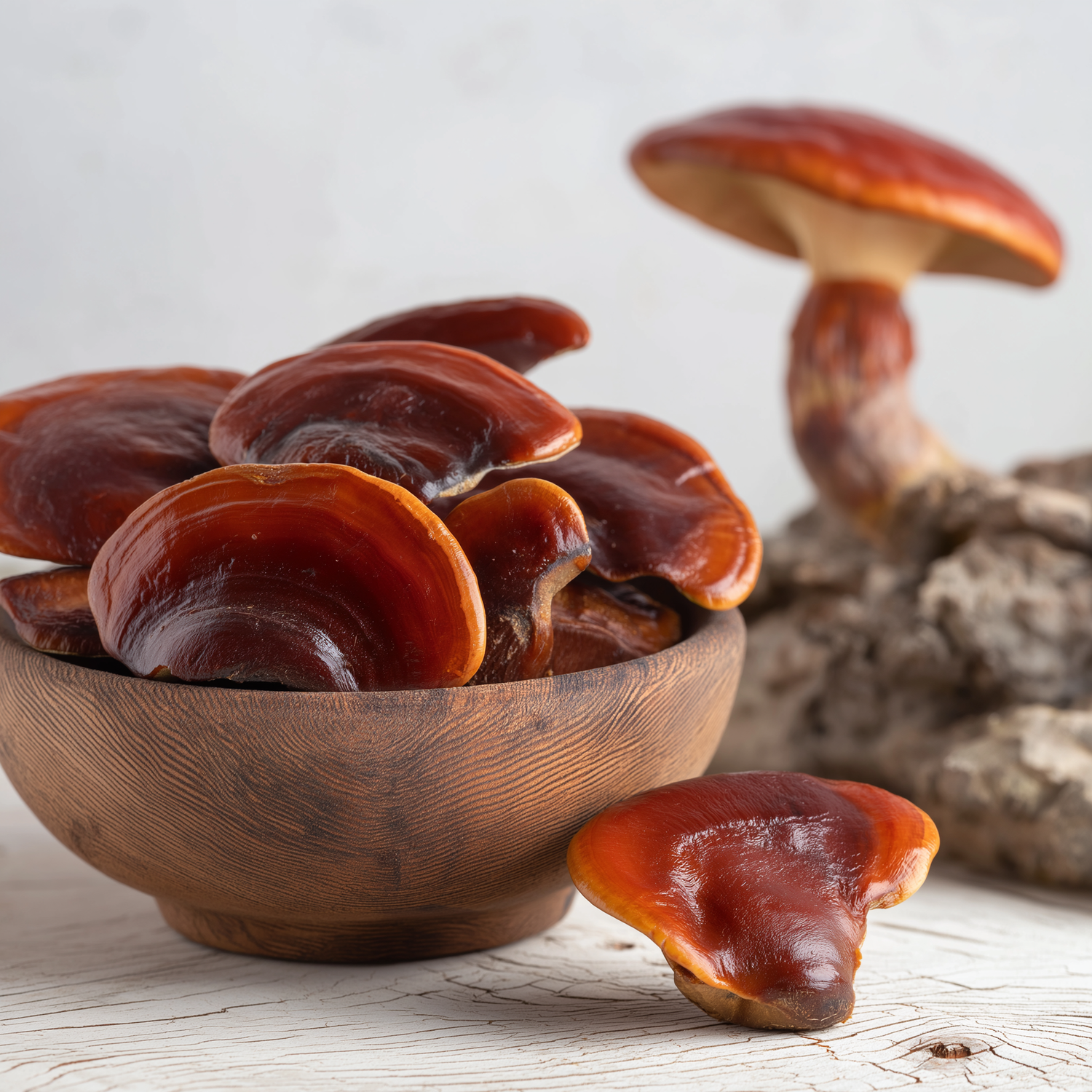
Reishi (Ganoderma lucidum)
Reishi, also known as the glossy lacquer polypore or ling zhi, has been used in East Asia for over 2,000 years as a component of traditional natural medicine. Historical texts associate it with vitality and balance. The name Ganoderma lucidum refers to its characteristically glossy, woody fruiting body.
Botanical characteristics
- Kingdom: Fungi, Family: Ganodermataceae
- Fan-shaped fruiting body, reddish-brown to black, lacquer-like, shiny
- Firm, woody consistency
- Naturally occurring on dead hardwood in warm regions
- Rare in nature, now predominantly cultivated
Ingredients
The following have been scientifically investigated:
- Polysaccharides (especially beta-glucans)
- Triterpenes (e.g. ganoderic acids)
- sterols, peptides, minerals
There are currently no approved health claims for Reishi under EU Regulation (EC) No. 1924/2006.
Traditional use
In TCM, reishi is considered a "tonifying agent" and is traditionally associated with "vital energy (Qi)," the heart, liver, and immune system. It is also a component of medicinal mushroom blends in Japanese Kampo medicine.
This information is based exclusively on traditional tradition.
Modern use (advertising)
Today, Reishi is usually offered in dietary supplements as a powder or extract.
Our product Beta-D-Immun contains per daily dose (3 capsules):
- 220 mg Reishi powder
- supplemented with vitamin C, zinc gluconate, astaxanthin and maitake
The information on Reishi is based on traditional use and scientific literature. These are not permitted health claims within the meaning of EU regulations.
Instructions for use
- No substitute for a balanced diet
- In case of autoimmune diseases, pregnancy or breastfeeding, seek medical advice beforehand
- Follow the manufacturer's dosage recommendations
Scientific studies (general information)
- Immunomodulatory effects: Immunomodulatory effects of Ganoderma lucidum, Journal of Ethnopharmacology (2015)
- Bioactive substances: Bioactive compounds from Ganoderma lucidum and their potential therapeutic effects, International Journal of Molecular Sciences (2020)
Frequently Asked Questions (FAQ)
Is Reishi a herbal active ingredient?
No, it is a fungus (Kingdom Fungi), but is often counted as a “plant ingredient” in food supplements.
Can Reishi support the immune system?
There are scientific studies investigating the properties of ingredients such as beta-glucans from Reishi. However, no health claims are permitted for Reishi in the EU.
Is Reishi allowed in Germany?
Yes, if the declaration and advertising claims comply with EU requirements.
Is Reishi vegan?
Yes, as long as the capsule material is not animal-based.
Legal notice
This article is for general information purposes only. It does not replace medical advice. No approved health claims exist for Reishi under EU Regulation (EC) No. 1924/2006.
Transparency notice
The products mentioned in this article refer to products from our own range. We generate revenue from the sale of these products. Disclosures are in accordance with Section 5a of the German Unfair Competition Act (UWG) and Section 3 of the German Commercial Code (HWG).
