

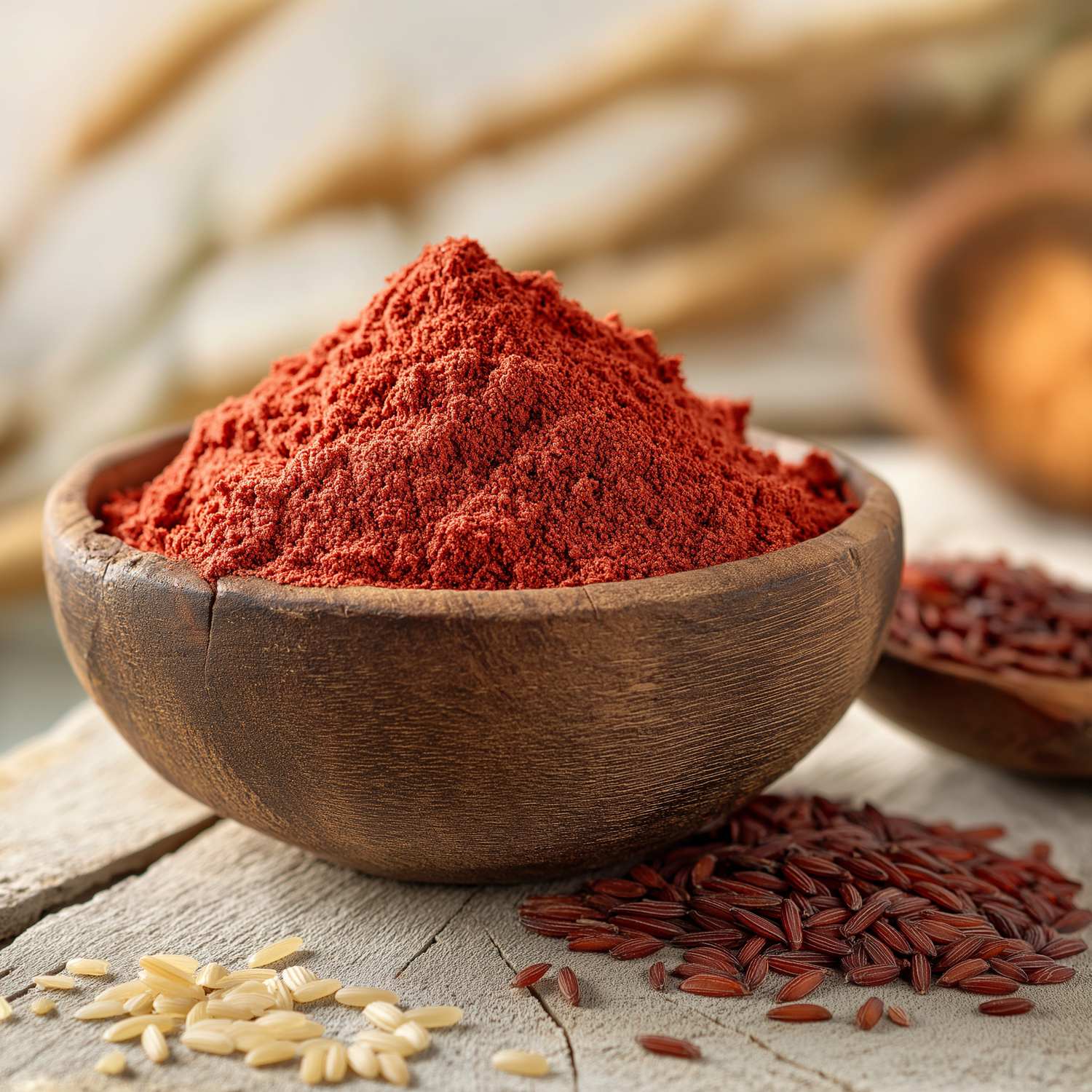
Red rice powder (Monascus purpureus)
Red rice is produced by fermenting rice with the fungus Monascus purpureus. In China and other parts of Asia, it has been used for centuries both as a food and in traditional medicine. One natural constituent is monacolin K, a substance chemically closely related to the drug lovastatin.
Origin & Production
For production, white rice is fermented with Monascus purpureus.
In the European Union, a maximum amount of 3 mg monacolin K per daily dose in food supplements has been in effect since 2022.
Our product Vergelip contains per daily dose (1 capsule):
- 125 mg red rice powder with 2 mg monacolin K
Ingredients
- Monacolin K – a lovastatin-like natural substance
- Other monacolins – secondary metabolites of the fungus
- Natural dyes – responsible for the red color
- Aromatic substances from fermentation
Strict legal regulations apply to monacolin K. Freely usable health claims are not permitted .
Traditional use
In traditional Chinese medicine, red rice is mentioned in connection with digestion and the cardiovascular system, among other things.
This information is based exclusively on traditional tradition and is not equivalent to scientifically proven statements according to the EU Health Claims Regulation.
Modern use (advertising)
Today, red rice powder is used in dietary supplements primarily as a source of monacolin K.
Our product Vergelip combines per daily dose (1 capsule):
- 125 mg red rice powder (2 mg monacolin K)
- Green coffee bean extract
- Coenzyme Q10
The ingredients and combinations mentioned are based on traditional use and scientific literature. They do not constitute approved health claims .
Scientific studies (general information)
These publications are intended solely for general scientific information:
- Efficacy and safety of red yeast rice (Monascus purpureus) as a cholesterol-lowering agent, American Journal of Cardiology (2009),
- Red yeast rice for dyslipidemia in statin-intolerant patients: a systematic review and meta-analysis, Clinical Lipidology (2013)
Instructions for use
- Legally prescribed maximum amount: no more than 3 mg monacolin K per day
- Not recommended for pregnant women, breastfeeding women or persons under 18 years of age
- Consult a doctor if you are taking medication (especially statins)
- Use only tested products that do not contain citrinin
Frequently Asked Questions (FAQ)
What is monacolin K?
A natural substance made from fermented rice that is chemically related to lovastatin.
Is red rice powder safe?
It is considered safe if the dosage is observed and tested products are used.
Can red rice replace medication?
No. Dietary supplements are not a substitute for medically prescribed treatment.
Are there any possible side effects?
Rarely, gastrointestinal complaints or muscle-related symptoms may occur, similar to those seen with statins.
Legal notice
This article is for general information purposes only.
For monacolin K, there are legal limits on quantities and no approved health claims according to EU Regulation (EC) No. 1924/2006.
Dietary supplements do not replace medical advice or treatment.
Transparency notice
The products mentioned in this article refer to products from our own range. We generate revenue from the sale of these products. Disclosures are in accordance with Section 5a of the German Unfair Competition Act (UWG) and Section 3 of the German Commercial Code (HWG).
