

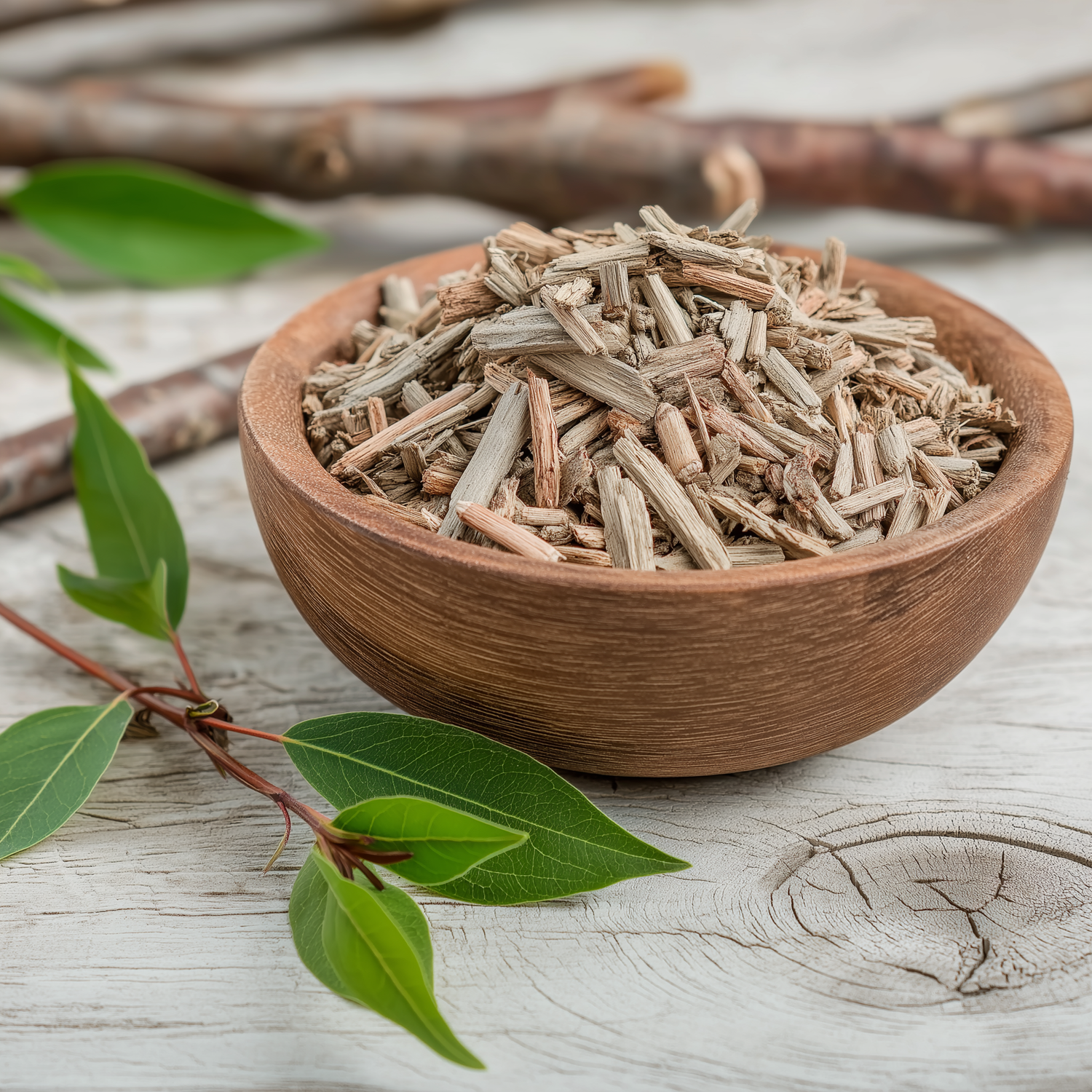
Willow bark extract (Salix alba)
The white willow (Salix alba) is a deciduous tree in the willow family (Salicaceae). It is widespread in Europe, North Africa, and Western Asia and prefers moist locations such as riverbanks, floodplains, and lake edges. Its narrow, silvery-green leaves, which give the species its name, are characteristic.
Botanical characteristics
In spring, the white willow produces striking yellowish catkins. The bark of young branches is harvested for use in dietary supplements. This bark contains a variety of secondary plant substances, including glycosides such as salicin.
Ingredients of willow bark extract
Willow bark contains various herbal ingredients, including:
- Salicin (a glycoside from the group of phenol glycosides)
- Flavonoids Polyphenols
- Tannins
The exact composition may vary depending on location, time of harvest and processing.
Traditional use
Willow bark was traditionally described in ancient times and the European Middle Ages. It is mentioned in numerous historical herbal books, including monastic medicine.
This information is based on traditional sources and is intended for general information purposes only. It does not constitute a medical statement within the meaning of the German Medicines Advertising Act (HWG).
Historical context: Salicin and ASA
The plant glycoside salicin is considered the inspiration for the development of acetylsalicylic acid (ASA), which was introduced as a medicine in 1899. It is important to note, however, that willow bark extract is a traditional plant raw material and should not be equated with synthetic acetylsalicylic acid.
Cultivation and extraction
Salix alba thrives in temperate climates with sufficient soil moisture. To obtain the extract, the bark of young branches is harvested and processed under controlled conditions—ideally according to international quality standards such as GMP (Good Manufacturing Practice). Sustainable harvesting methods contribute to the protection of natural populations.
Research and literature
Willow bark is the subject of various scientific studies, examining, among other things, its composition, processing, and the properties of its polyphenols.
- Journal of Pain Research (2021): Overview of herbal constituents of willow bark
- Phytomedicine Journal (2020): Studies on polyphenols and plant composition
- Frontiers in Pharmacology (2022): Tolerance studies on willow bark extract
Note: These studies are provided for scientific purposes only. They do not constitute approved health claims within the meaning of EU Regulation (EC) No. 1924/2006.
Food supplement with willow bark extract (advertisement)
Algosal – willow bark extract in tested quality
Per daily dose (1 capsule):
- 267 mg willow bark extract
- of which 40 mg salicin
Note: The use of willow bark extract in dietary supplements is based on traditional use. Dietary supplements are not a substitute for a varied diet and a healthy lifestyle.
People with known intolerance to salicylates or who are taking anticoagulant medication should consult a medical professional before consumption.
Frequently Asked Questions (FAQ)
What is salicin?
Salicin is a plant glycoside from willow bark that belongs to the group of phenolic glycosides.
Is willow bark extract the same as Aspirin®?
No. Willow bark extract contains natural salicin, but not synthetic acetylsalicylic acid (ASA). It is a traditional herbal product, not a medicinal product.
Are there any special instructions for taking it?
Yes. People with salicylate intolerance or taking anticoagulant medication should consult a healthcare professional before consuming this product.
Is willow bark extract suitable for children or pregnant women?
Willow bark extract is not suitable for children, pregnant women, or breastfeeding women because there is insufficient data on its safety.
How is willow bark extract taken?
Take according to the dosage recommendations on the label. Do not exceed the recommended daily dose.
Legal notice
The content of this article is based on traditional use and publicly available scientific literature. It is intended solely as general information about the ingredients of plant extracts and dietary supplements.
Dietary supplements are food products. They are not intended to treat, cure, or prevent any disease.
Dietary supplements are food products and are not intended to treat, cure, or prevent any disease.
Transparency notice
The products mentioned in this article refer to products from our own range. We generate revenue from the sale of these products. Disclosures are in accordance with Section 5a of the German Unfair Competition Act (UWG) and Section 3 of the German Commercial Code (HWG).
