

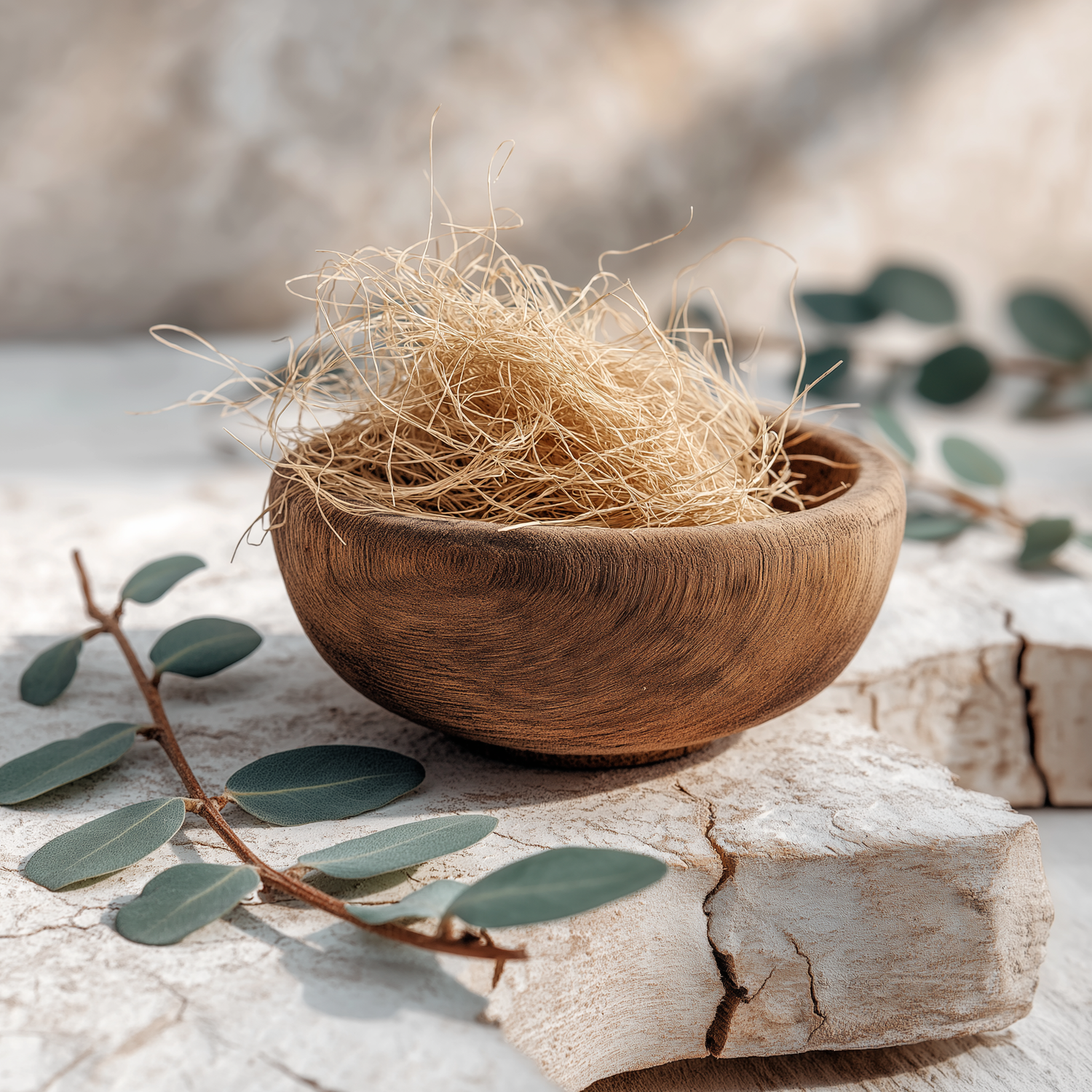
Acacia fibers (Acacia senegal ┃ Acacia seyal)
Acacia fiber, also known as gum arabic, is a natural, soluble dietary fiber obtained from the dried sap of Acacia senegal or Acacia seyal. These shrub-like trees belong to the legume family (Fabaceae) and are native primarily to the arid regions of Africa. Acacia fiber is tasteless, expandable, and often used as an ingredient in high-fiber foods.
Botanical characteristics
Acacia senegal and Acacia seyal grow as thorny shrubs or small trees with pinnate leaves and whitish-yellow flowers. When mechanically injured or exposed to heat, the bark secretes a resinous sap, which dries in air to form a solid substance known as acacia fiber.
Ingredients of acacia fiber
Acacia fiber consists predominantly of high-molecular-weight polysaccharides, especially arabinogalactans. Other natural constituents may include:
- Traces of minerals such as potassium, calcium and magnesium
- Amino acids
- Polyphenols and proteins in small amounts
Acacia fiber is a type of soluble fiber.
Traditional use
Gum arabic was already used in ancient Egypt as an ingredient in paints, cosmetics, and food. The fiber was also traditionally used in African and Arab cultures as part of their diet.
This information is based on traditional applications and is intended for general information purposes only. It does not constitute a medical statement within the meaning of the German Medicines Advertising Act (HWG).
Origin and processing
Harvesting is traditionally done by carefully scratching the tree bark, especially in regions such as Sudan, Nigeria, or Chad. The dried plant sap is collected, purified, and then gently processed into a fine powder – without the use of chemical solvents.
Cultivation
Acacia trees thrive in arid regions with poor soils. Their cultivation can contribute to reforestation, reduce soil erosion, and provide an important source of income for local communities. Aspects such as sustainable harvesting methods and fair trade conditions are particularly important.
Research and literature
Acacia fiber has been studied in various scientific studies in the context of high-fiber diets, focusing on aspects such as composition, tolerance, and potential interactions with the gut microbiome.
Study notes:
• British Journal of Nutrition (2020): Investigations into dietary fiber in a balanced diet
• Journal of Functional Foods (2022): Tolerance studies on acacia fibers
• Frontiers in Nutrition (2021): Overview of fiber and gut microbiota
A notice:
The studies cited serve solely for scientific purposes. They do not constitute approved health claims within the meaning of EU Regulation (EC) No. 1924/2006.
Dietary supplement with acacia fiber (advertisement)
👉 KoloBios – Fiber complex with acacia fiber
Per recommended daily intake (13.3 g):
• 10.5 g acacia fiber
• 1.5 g psyllium husk powder
• 1 g L-glutamine
• 250 mg grape seed extract (of which 150 mg OPC)
• 30 mg trans-resveratrol
A notice:
Acacia fiber in dietary supplements is used as part of a varied and fiber-rich diet. Dietary supplements are not a substitute for a balanced diet and a healthy lifestyle.
Frequently Asked Questions (FAQ)
What is acacia fiber?
Acacia fiber is a natural, soluble fiber derived from the dried sap of certain acacia species.
How is acacia fiber consumed?
The fiber can be stirred into water, juice, or yogurt. It should always be consumed with sufficient liquid. The recommended daily intake should not be exceeded.
Who is acacia fiber suitable for?
Acacia fiber is suitable for adults who want to supplement their daily fiber intake. For children or pregnant women, individual consultation with a healthcare professional is recommended.
Are there any special instructions?
People with existing intolerance to fiber or with acute gastrointestinal complaints should consult a medical professional before consumption.
Legal notice
The content of this article is based on traditional use and publicly available scientific literature. It is intended solely to provide general information about the ingredients of plant extracts and dietary supplements.
Dietary supplements are food products. They are not intended to treat, cure, or prevent any disease.
Transparency notice
The products mentioned in this article refer to products from our own range. We generate revenue from the sale of these products. Disclosures are in accordance with Section 5a of the German Unfair Competition Act (UWG) and Section 3 of the German Commercial Code (HWG).
The plant images used in this article are symbolic representations. They were created with AI support and are for illustrative purposes only. Deviations from the natural representation are possible.
