

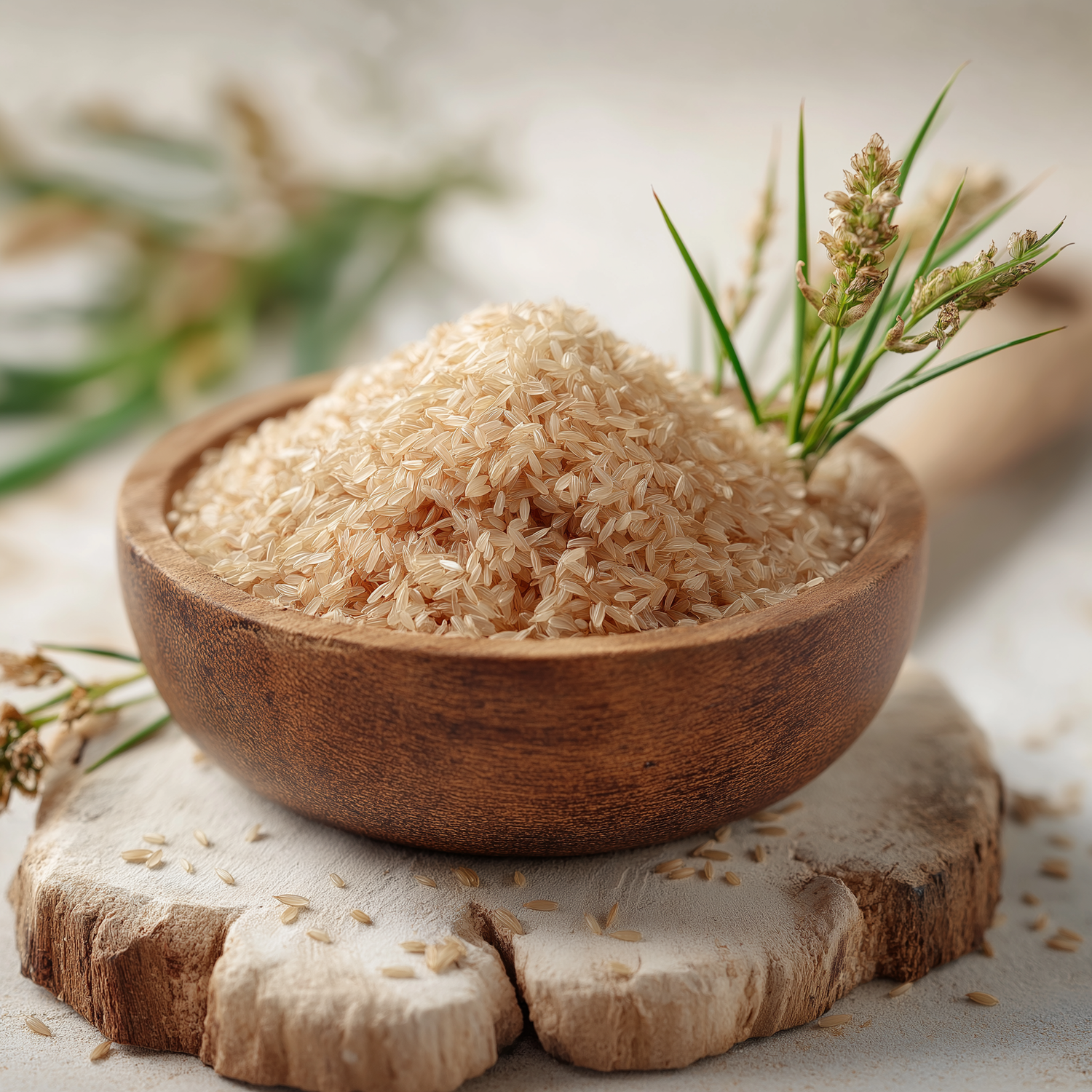
Psyllium husks (Plantago ovata)
Psyllium husks come from the dried seed husks of the Plantago ovata plant, which is primarily grown in India. They are rich in soluble fiber and have been traditionally used for centuries to support digestion.
Botanical characteristics
- Family: Plantaginaceae
- Growth form: Annual herbaceous plant
- Seed coats: Yellowish, with strong swelling capacity
- Special feature: Swells on contact with water, which is why the shells are valued as a natural swelling agent
Ingredients
Psyllium husks consist largely of soluble fiber , particularly mucilage (psyllium). These bind water, increase the volume of intestinal contents, and thus contribute to promoting intestinal function.
These effects are described in specialist literature and monographs, but there are currently no approved health claims for psyllium husks in the EU.
Traditional use
Psyllium husks are traditionally used for:
- Supports healthy digestion
- Promoting intestinal function
This information is based on traditional use in accordance with the annex to EU Regulation 432/2012 and is not to be understood as an officially approved health claim .
Modern use (advertising)
KoloBios – fiber complex with psyllium husks.
- Per daily dose (13.3 g): 1.5 g psyllium husk powder
- Combination with acacia fiber , L-glutamine, grape seed extract (OPC) and resveratrol
Dietary supplements are foods and not medicines . They are not intended to treat, cure, or prevent any disease.
Scientific studies
- Psyllium and its impact on human health. Journal of Clinical Gastroenterology, 2014
- Dietary fiber and gut health: focus on psyllium. Nutrients, 2019
These studies demonstrate the scientific interest in psyllium husk. They serve as a scientific assessment , not as a basis for health-related advertising.
Frequently Asked Questions (FAQ)
What are psyllium husks?
The outer seed shells of the plant Plantago ovata, rich in fiber with high swelling capacity.
How are they traditionally used?
To support intestinal function and healthy digestion (traditional use).
How do I take it?
As powder or capsules, always with plenty of liquid.
Are psyllium husks safe?
Yes, they are considered safe at recommended dosage.
Can psyllium husks cure diseases?
No. They are food and not intended to treat or cure any disease.
Instructions for use
- Always take with sufficient liquid
- No substitute for a varied diet
- If you have an existing medical condition or are taking medication at the same time, seek medical advice
Legal notice
The content of this article is based on traditional practice and scientific literature. It is provided for general information purposes only and does not constitute medical advice.
Dietary supplements are food products. They are neither a substitute for a balanced diet nor for medical treatment.
Transparency notice
The products mentioned in this article refer to products from our own range. We generate revenue from the sale of these products. Disclosures are in accordance with Section 5a of the German Unfair Competition Act (UWG) and Section 3 of the German Commercial Code (HWG).
The plant images used in this article are symbolic representations. They were created with AI support and are for illustrative purposes only. Deviations from the natural representation are possible.